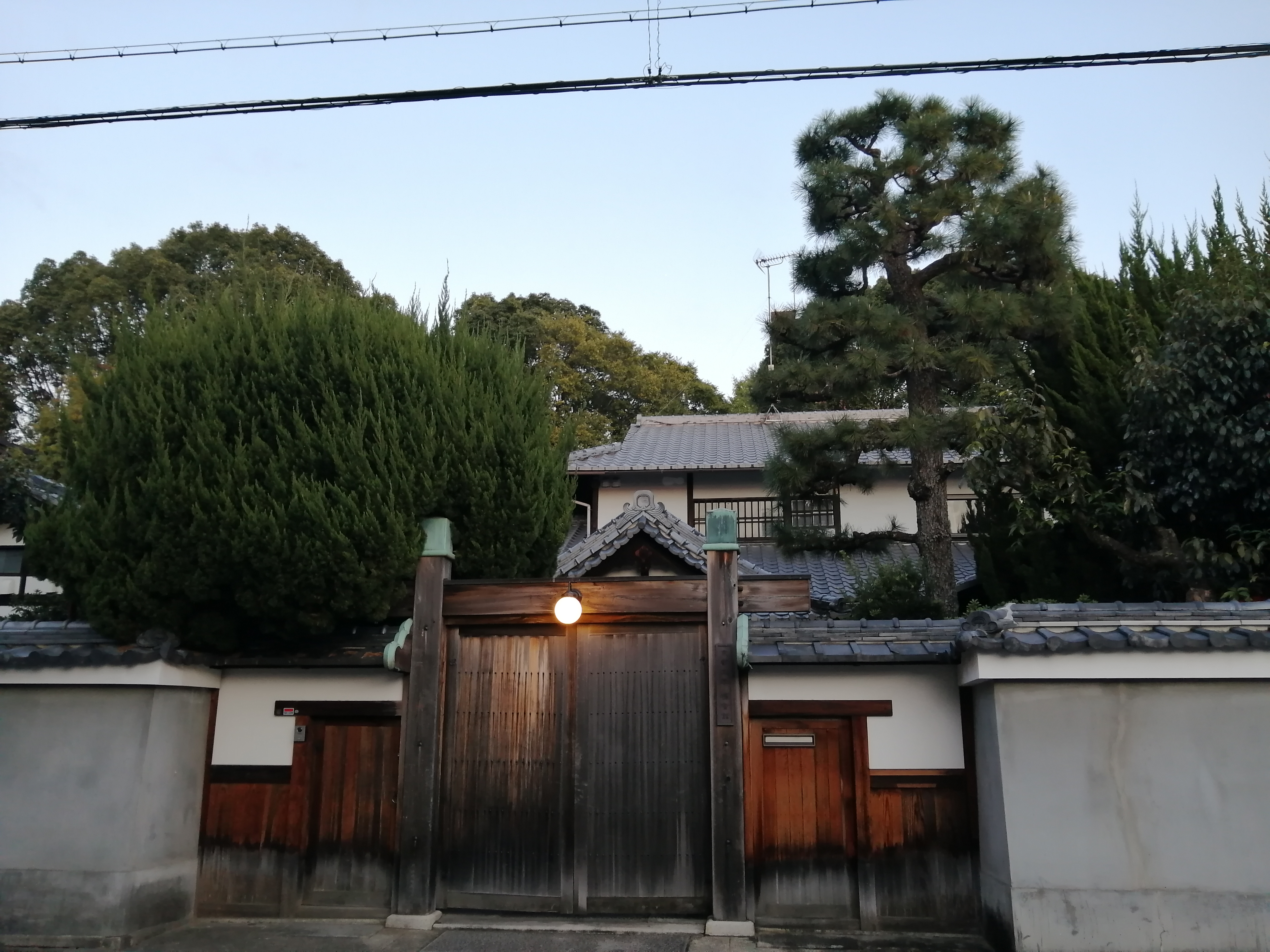
The first commuter train came around 5am. My eyes still closed, my body warm in bed, I imagined faceless people in black suits and students in uniforms, riding silently in the darkness. The rhythmic sounds of the tracks are comforting, as are the black crows, swirling and gliding on wind currents around Toji Temple.
I am away from the responsibilities of family and daily life here. It makes me want to write. I had the same feeling in 2016, when I first came to Kyoto as an intern to NTT. Every day, I’d take out my pen and journal – capturing all that I saw, felt, heard, tasted and touched that day. Only now, I am ten years older.
The air smells different here, and the sounds are different too. The Japanese pay attention to small details – a little tray to sort out cash and change (instead of crumbling it into a sweaty mess in my hand), wet wipes or hot towels served before a meal to clean your hands, heated toilet seats (goodbye freezing bums in winter time!), and the etiquette to silence your phone and speak quietly to avoid disturbing others on crowded trains. Every night, I wear my cotton pajamas, black slippers and throw a white towel around my neck (all complimentary of the hotel) to the public bath downstairs. I sit on a little wooden stool to wash away the dirt of my travels, my face barely visible in the mirror through the steam. Women are everywhere, but we are all equally human here, no bodies are judged or evaluated. Under the golden heat lamps, our day melts away as we step into the water. The atmosphere is serene.
Who would I have been if I had grown up in Japan? I always wonder that when I come to this side of the world. I am anonymous here, one of 122 million, black hair and brown eyes (note: Canada is 41 million, about 34% of the Japanese population). Who would I have been, growing up in this culture, instead of in Western Canada?
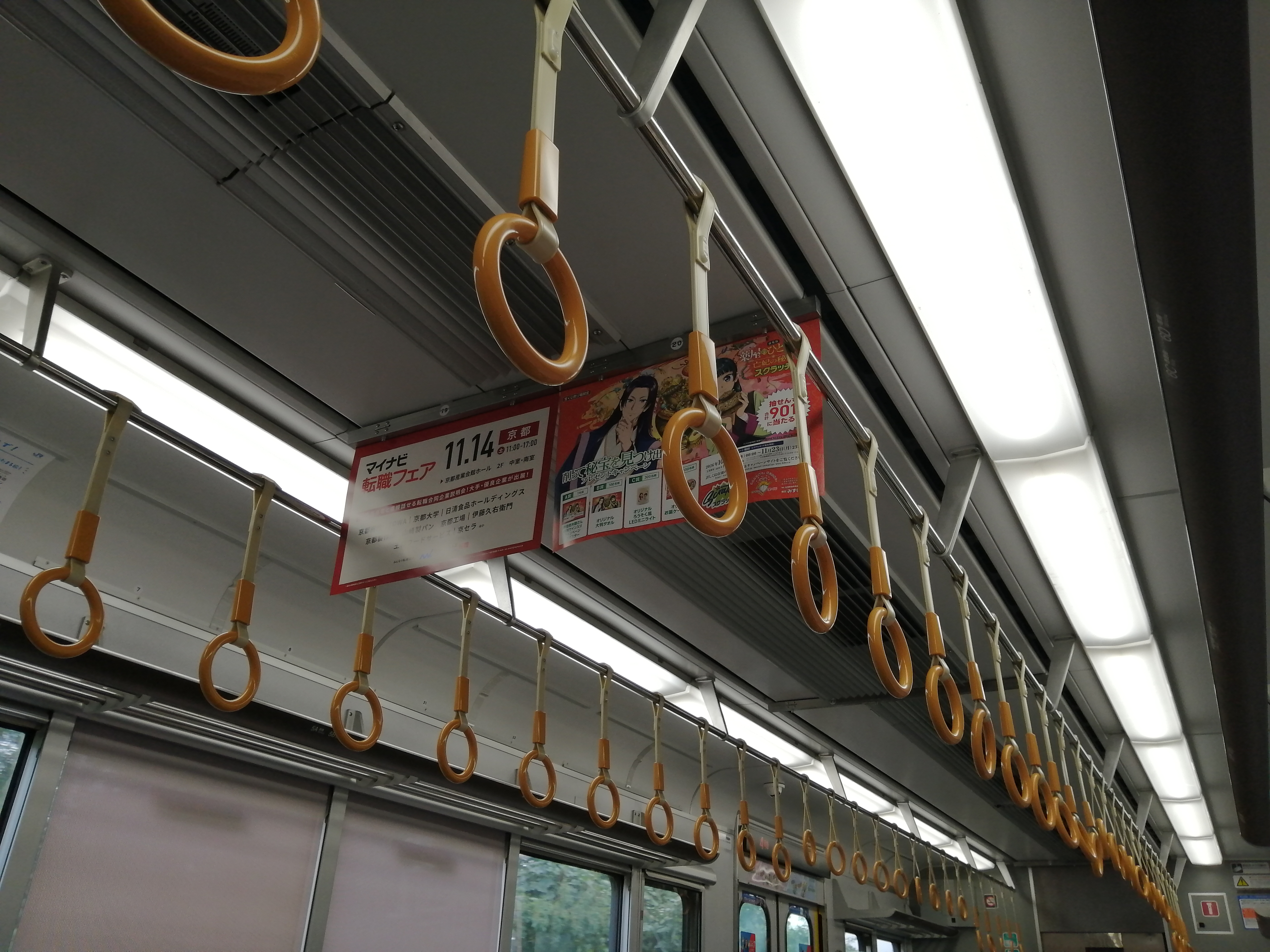
The napkins are smaller and thinner here, the spaces tighter, the toothpaste tubes miniature. Resource use is more efficient here, less wasteful and boastful than in Canada. The handholds on the commuter train are triple the amount we have on Calgary CTrains, a sign of how crowded it can get during the work hour rush. The pickup trucks are functional and efficiently designed – a visual contrast to the heavy-duty (dare I say, obnoxious??) SUVs and pickup trucks I see around Calgary. The work ethic astounds me: from the young 7-Eleven employee who respectfully guides me on how to receive change from the machine when I buy onigiri for breakfast, to the bus driver who offers me a transit map, showing me how to get to my destination when I get lost on Bus 205 (who knew it goes both directions from the same stop??!), to the uniformed employee diligently directing traffic coming out of an underground parking lot. There is none of the “I’m too cool to care about this low-status/low-wage/labour job” attitude here. Work is work, you get it done and you get it done well. Professionalism is the word I am looking for. Perhaps my favourite small and insignificant detail is a woven basket that is offered in cafes – a temporary home for my backpack so it doesn’t need to sit on the (meticulously clean) floor.
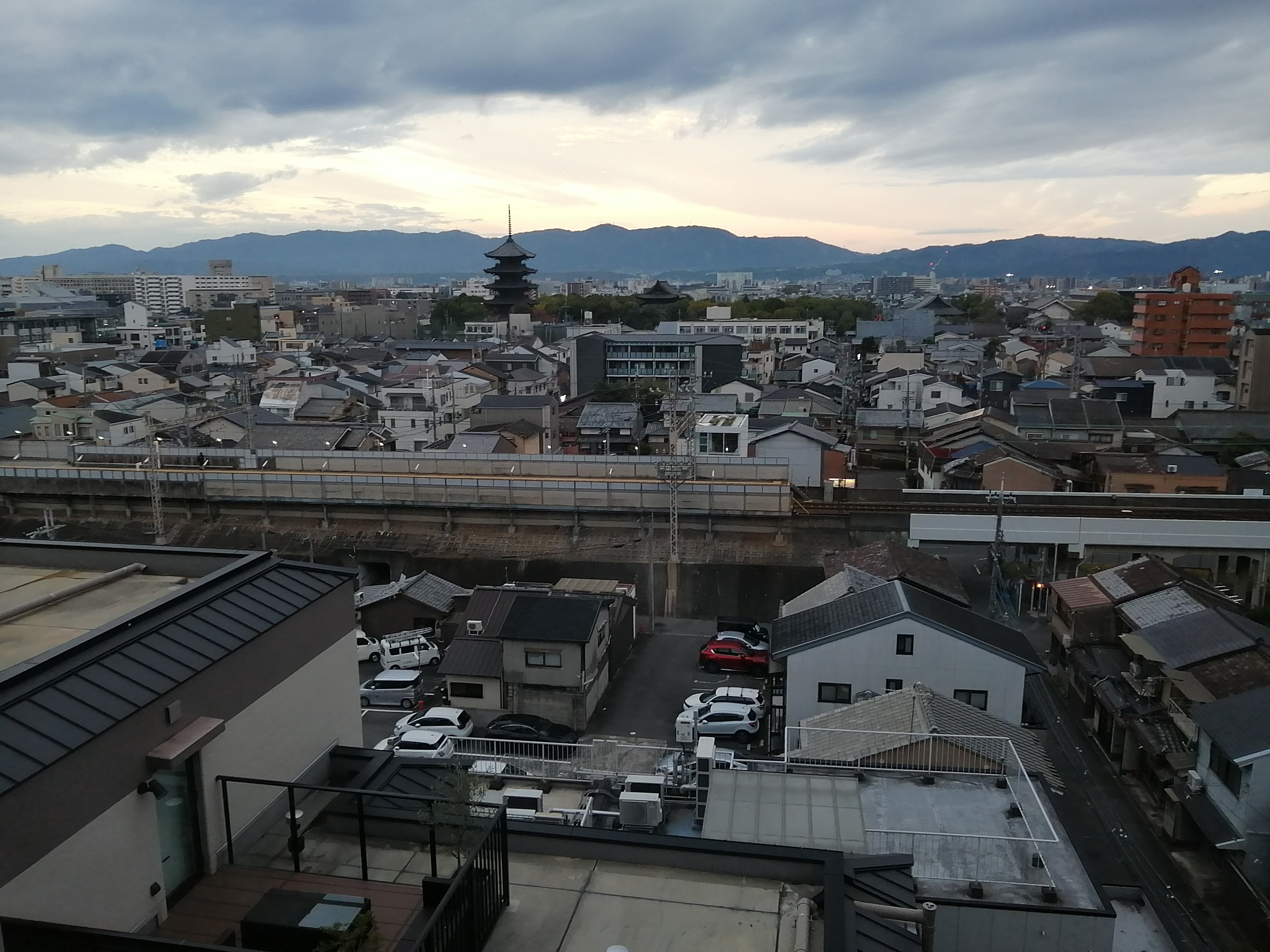
Yet, I think it may be hard for me to live here. Walking through Kyoto JR Station is an overwhelming load to my senses. I’ve learned in the last two days to keep my eyes down, to avoid unconsciously tracking and processing the hundreds of faces I see walking to their destination. The sheer number of people is something I am not used to (yet). My hotel room has become a sanctuary – a cozy haven tucked away on an upper floor, facing South towards Toji Temple. I begin the day quiet and I end the day quiet. Recharging the energy I leaked while navigating this hustling, bustling city.
And finally – the cash. For a high tech society, I am surprised that cash is still the dominant form of payment. Yet, when asking, a friend says that Japanese people “trust their cash”. I took this to mean that it is private and secure. Nothing can be traced, documented, tracked (and possibly, breached, phished, hacked??) It is tangible, something we can hold and touch. Spending it makes me note the value of things – what I value and will offer in return. Somehow, holding cash makes me feel a bit more grounded, like I am right here, not there (off in my head somewhere) – a different feeling than mindlessly swiping my credit card – an experience that is indeed fast and convenient while feeling somewhat abstract and detached.
In this visit to Kyoto University exactly ten years after being an intern at NTT, I am so grateful that I am here.